Greenhouse Information and Materials
Want a greenhouse of your very own?
We're not talking about some lightweight cheap plastic piece of junk that will blow away in the first storm but one that will last you decades. Check with us for materials, plans, guidance and use our experience to have somthing that will make your neighbors jealous.
Having a greenhouse presents several advantages for gardeners and agricultural enthusiasts:
- **Extended Growing Season**: Greenhouses allow for year-round cultivation by protecting plants from extreme weather conditions such as frost, excessive heat, or heavy rain. This creates a stable environment conducive to growth beyond the typical outdoor growing season.
- **Controlled Environment**: Gardeners can manage temperature, humidity, light, and ventilation, providing optimal conditions tailored to specific plant needs. This level of control can enhance plant health and productivity.
- **Pest and Disease Management**: A greenhouse acts as a barrier against pests and diseases, reducing the reliance on chemical interventions. This can lead to healthier plants and more organic produce.
- **Increased Yield and Quality**: By maximizing growth conditions, greenhouses can lead to higher yields and better-quality produce. Plants grown in a controlled environment often have faster growth rates and improved taste and appearance.
- **Diverse Plant Growth**: Greenhouses enable the cultivation of a wide variety of plants, regardless of local climate constraints. Gardeners can grow exotic or out-of-season plants that may not thrive outdoors in their region.
- **Resource Efficiency**: Advanced greenhouse systems can be designed to conserve water and optimize nutrient use, reducing waste and promoting sustainability in plant production.
- **Research and Experimentation**: For enthusiasts and researchers, greenhouses provide a space to experiment with plant varieties, breeding techniques, and cultivation methods, facilitating innovation and learning in horticulture. Overall, having a greenhouse offers numerous benefits that enhance the gardening experience and can contribute to sustainable agricultural practices.
At Austin Springs Acre, we are prepared to help you get started with a freestanding or lean-to style greenhouse. Check the Materials tab for moe information.
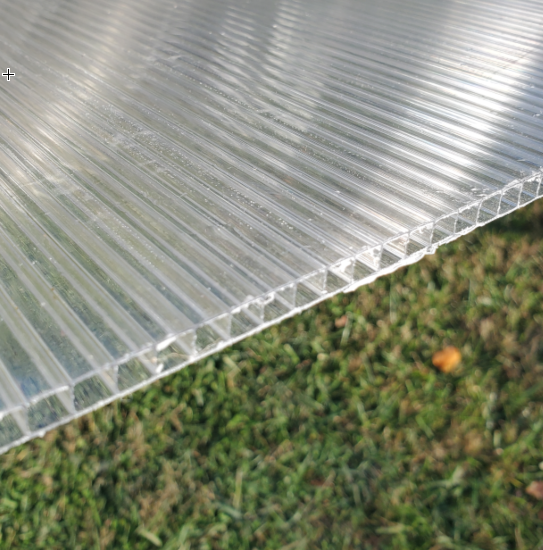
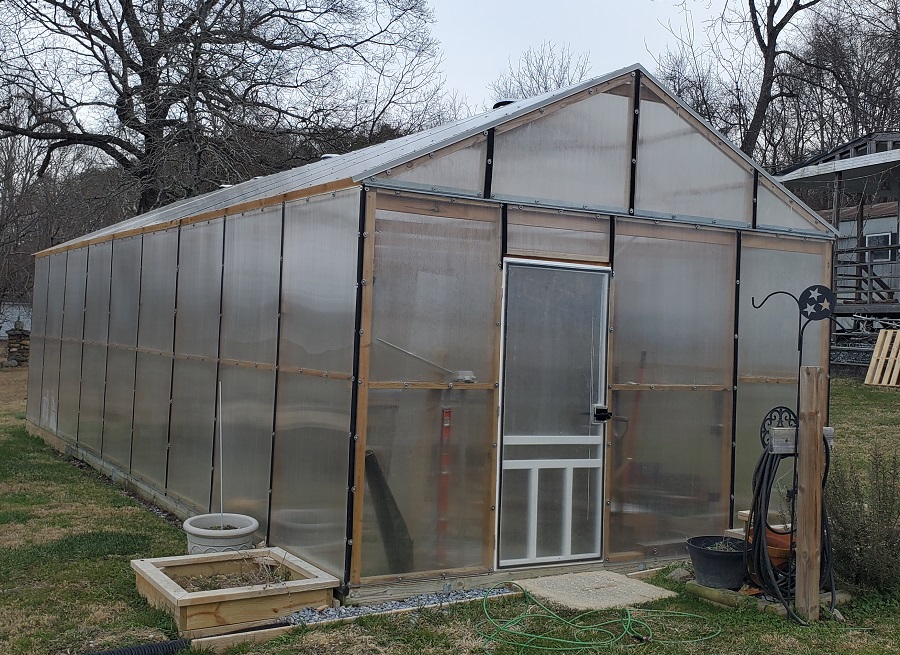
As we were assembling our 10' x 26' Planta greenhouse, we came to the conclusion that by if we purchased our own twinwall polycarbonate, we could design and build a wood frame greenhouse of the size that we wanted. Twin wall polycarbonate is not inexpensive and 1/3 of the cost in getting it is freight shipping. Rather than get just what we needed, we opted to go with a 200 sheet purchase which shipped on 2 4'x8' pallets which required a feight dock. This provides us the opportunity to help others get started with their own greenhouse or lean-to.
As can be seen, the structure is completely sealed to keep in warmth on cold days along with ventilators along the roof to keep conditions bearable in Summer months. Without the ventilators, the temperature can easily hit 120 degrees.
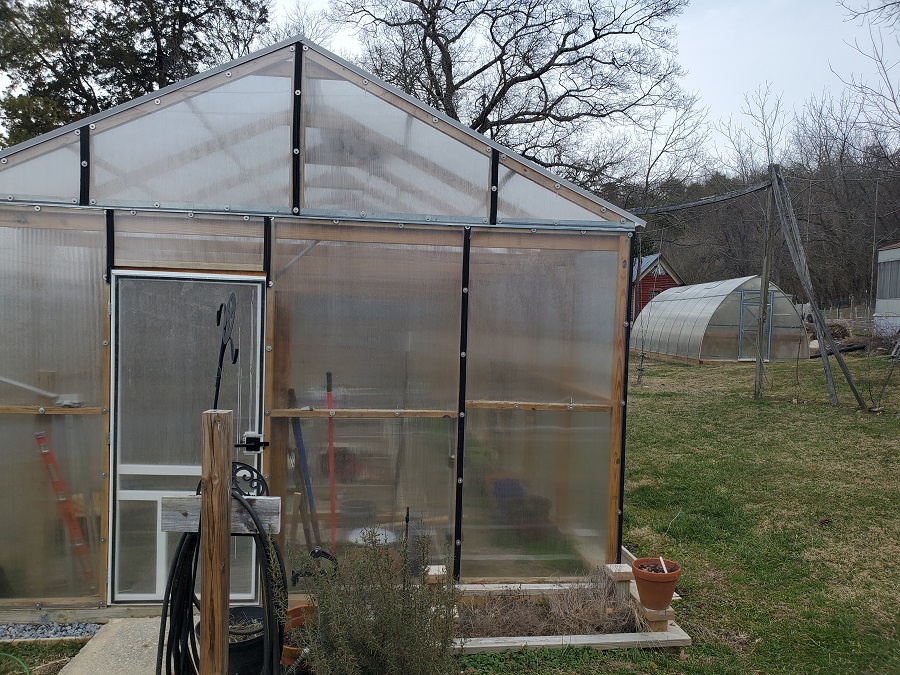
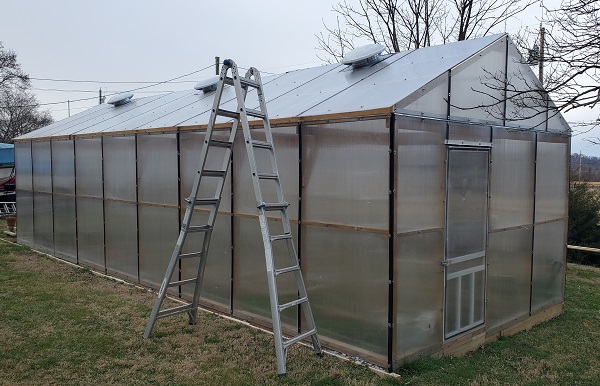


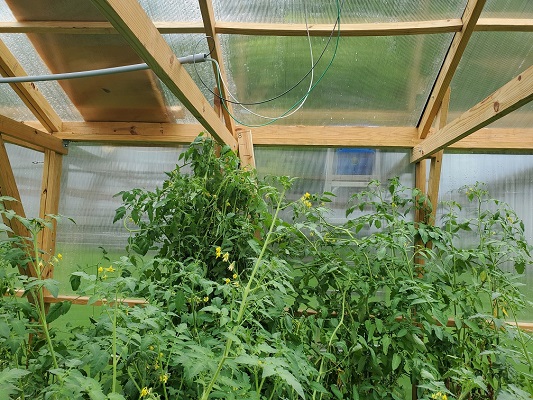


About the time that we started construction of the greenhouse, we had also started seedlings in the Planta 26. Once the new greenhouse was mostly framed in, we moved most of the tomatos in and let them go.
As can be seen in these pictures, late in the Summer, we had some that were well over 8' tall!
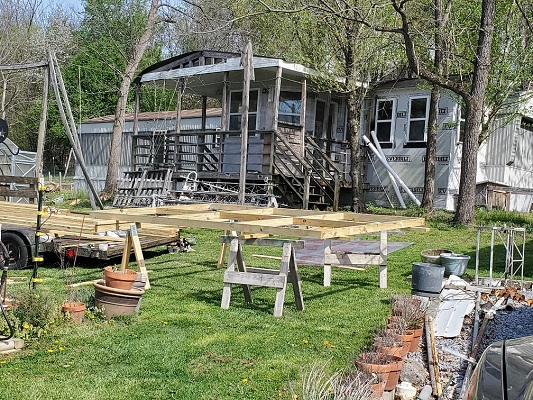
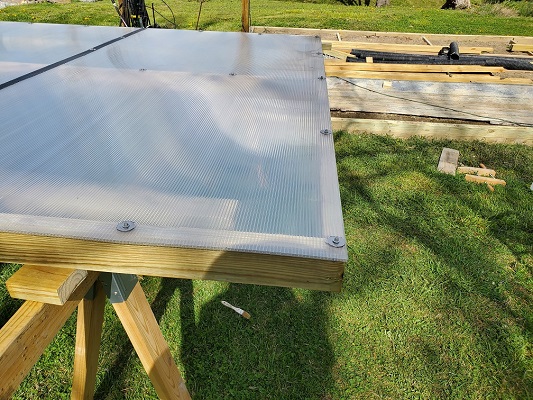


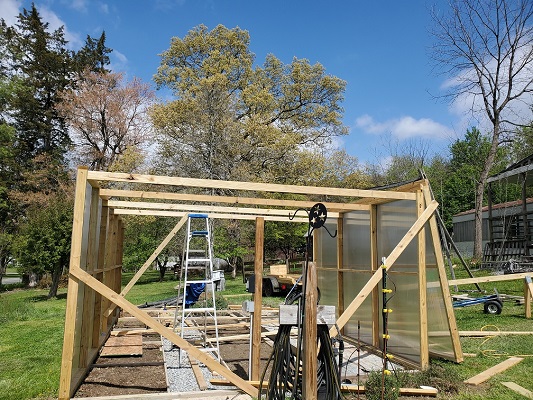
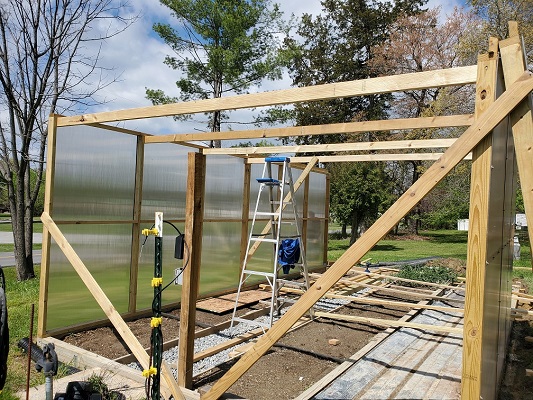
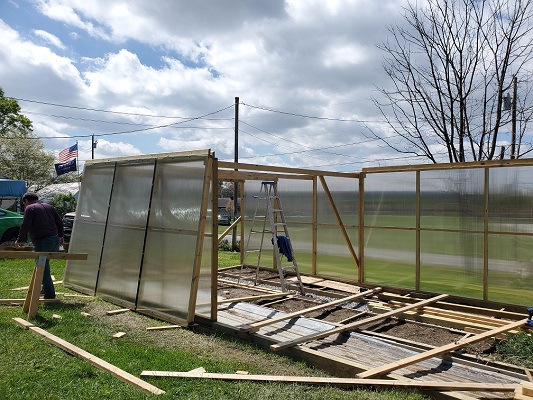
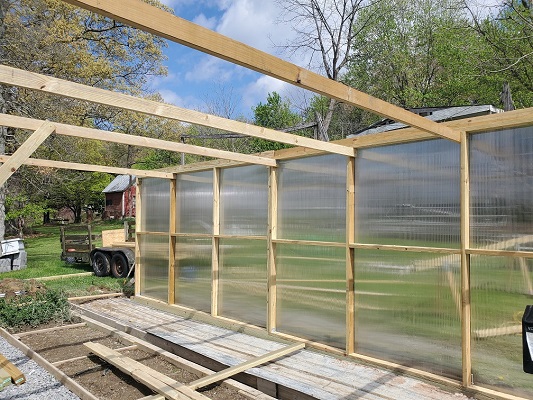
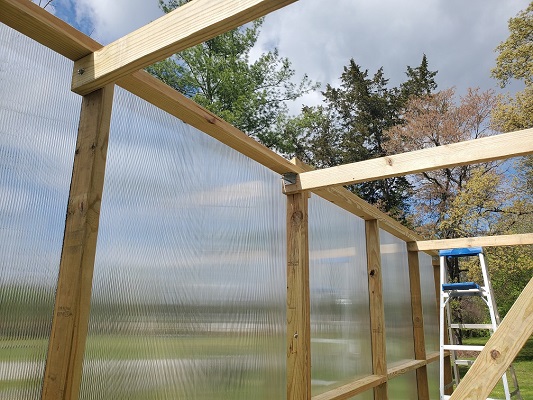
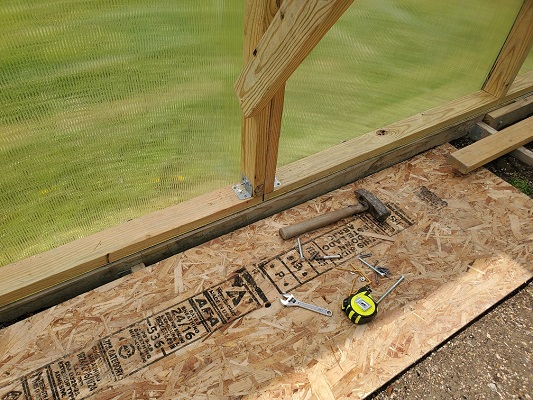


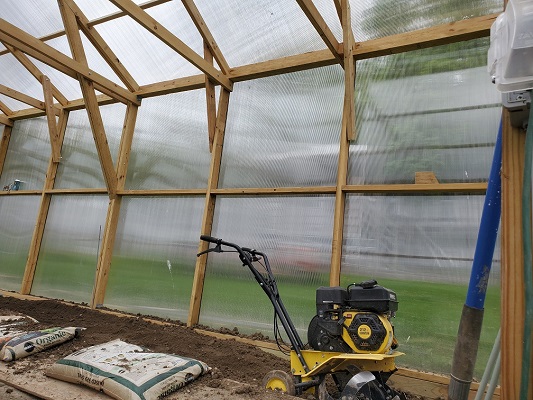


This is what is involved in building a greenhouse from scratch.
From a solid footing to bracing walls during the construction, a single person can do it; however, having an extra pair of hands around certainly helps.
Several years ago, we decided that we desired a greenhouse to start our seedlings eariler in the year and be able to expand our growing season. After a few weeks of research, we opted for a Planta Sungrow 26 greenhouse kit.
We expected a cheap Chinese grade greenhouse but were pleasantly surprised that it was made with top quality components. The metal had no burrs on it at all and assembly was tight.
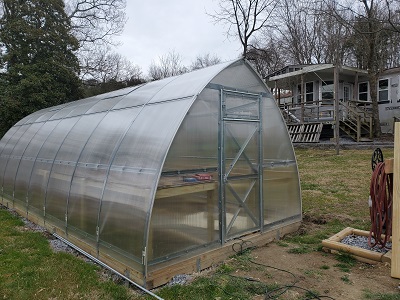


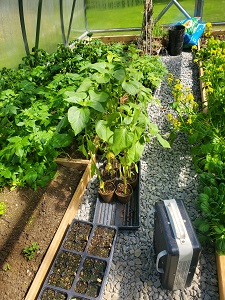


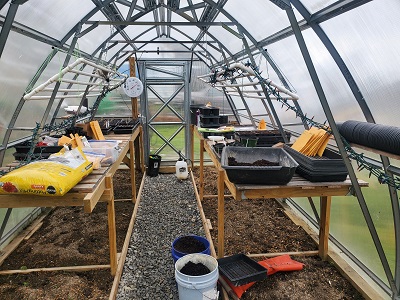


Part of keeping a greenhouse manageable is to have a central walkway and partitioned growing areas alongside it.
For seedling planting, old pallet wood works very well along with removable benches.
As seedlings are started on the planting surface, oftentimes early spring plants such as lettuce, spinach, and Asian greens like Bok Choi, Chijimisai and Choy Sum can be started below.


It is a well established fact that light stimulates growth in plants. Longer exposure to certain spectrums of light can extend the growing season in a greenhouse.
To minimize the effect of short days in the Spring and Fall, we installed 2 forms of growlights in our Planta 26 greenhouse. The primary lighting is LED grow strips attached to a PVC framework. The LED grow lights were supplemented with red and blue incandescent christmas lights which provide added red and blue wavelength light as well as generating a little warmth.

Preparing to move a 10' x 26' greenhouse is no small undertaking.
The first step was to locate a fairly flat location and prepare it to accept the greenhouse.


Once the new site was selected, it was time to level the ground and prepare the new footing to match the footing at the original location.
Once leveled out, the new footing was put into place with T-posts to keep everything in place and provide anchoring.
Preparing the greenhouse for the move requires disconnecting it from the existing footer and placing it on boards to act as the new footer.
Once it is secured, straps and other wood are used to keep it square.


After a week or 2 of effort, the Planta 26 is finally in place.

When building a greenhouse from scratch, starting with a solid game plan is the key to a successful venture.
- Start with a good site. Locate an area that receives sufficient sunlight, is relatively level, and has good drainage.
- Determine the desired size of the greenhouse. Keeping the size on 2' boundaries is best
- Decide on the style of footing. Poured concrte or wood footers are both acceptable; however, wind load during storms needs to be take into account to keep your investmnet from blowing away.
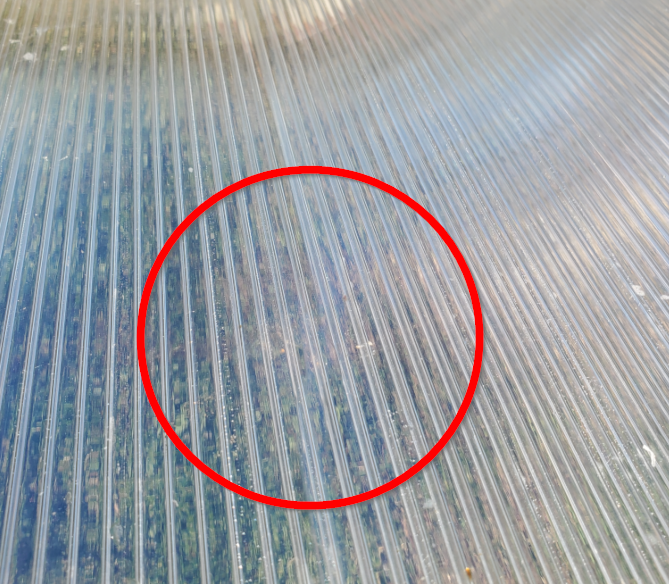
- Use a good blueprint for assembling your greenhouse. Keeping gaps between the polycarbonate panels is important to keep drafts and insects out or in if using ladybugs, to keep them inside.
- Depending on size, plan on providing ventilation through louvers or powered fans. A greenhouse can easily hit 120 degrees or more if not properly ventilated.
- Based on the design, prepare a list of materials. This prevents sticker shock when finished.
The experience that we gained in designing and constructing our greenhouse gave us valuable insight into what works well and what didn't go so well. Based on that experience, we have a handful of premade greenhouse plans available for purchase as well as an option for custom plans. We also maintain a stock of polycarbonate panels to get the project moving quickly.
Our designs are modular in nature with bolt together contruction methods ensuring high wind resistance. Secure footers and anchoring is the responsibility of the customer.
Greenhouse Plans - If you buy polycarbonate twin wall panels from us, we will provide standard or custom plans for free.
- $150.00 Custom plans.
- $100.00 Standard style greenhouse plans come in 8', 10' and 12' widths and 8', 12', 16', 20', etc... Lengths can be added.
- $50.00 Lean-To plans.
Polycarbonate Panels
We carry Lexan 4'x8' 6mm twinwall dual UV coated polycarbonate panels for $50.00 per sheet. Delivery can be arranged.
The primary materials needed for any greenhouse project are:
- Footer and anchoring materials.
- Twinwall polycarbonate panels.
- Either treated or painted wood for the frame. Treated lasts longer; however painted frames look nicer and are lighter.
- Bolts, washers and nuts for bolting the framework together. Screws can be used in some place but the structure requires bolting.
- Roofing screws, stainless washers and sealants for attaching panels to the wood frame.
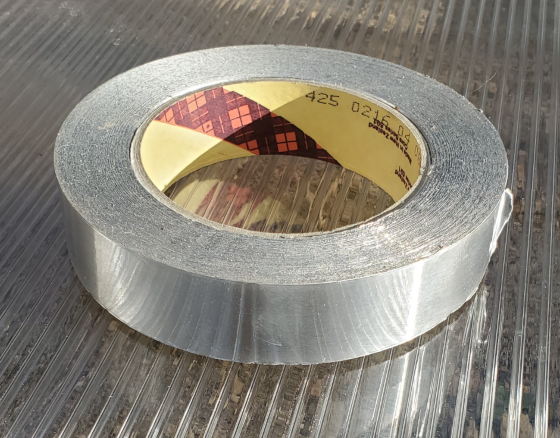
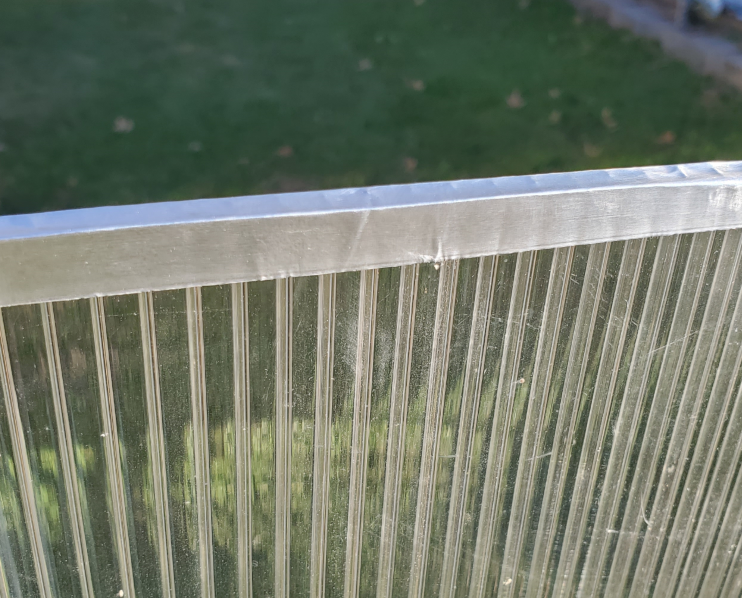
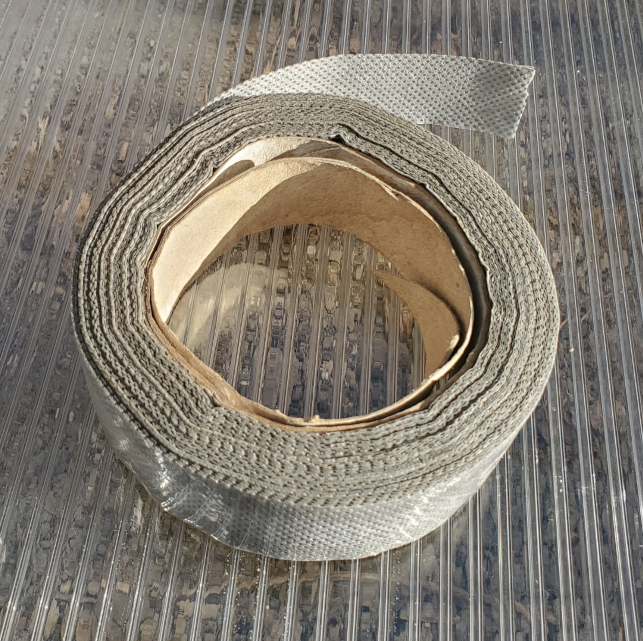
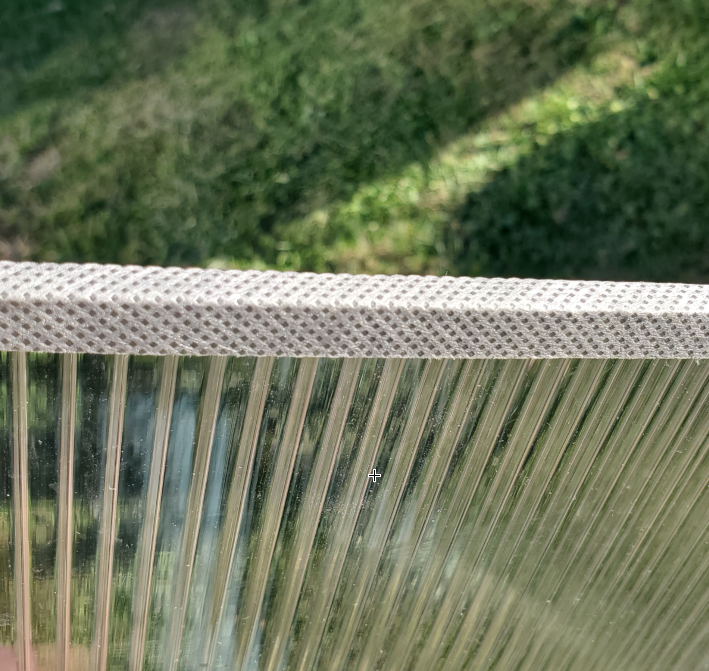
- Seam and end sealing tapes to keep the greenhouse as tight as possible.